
Loan Recovery at the cost of Dignity: When Loan Recovery Turns Into Harassment
8/31/2026
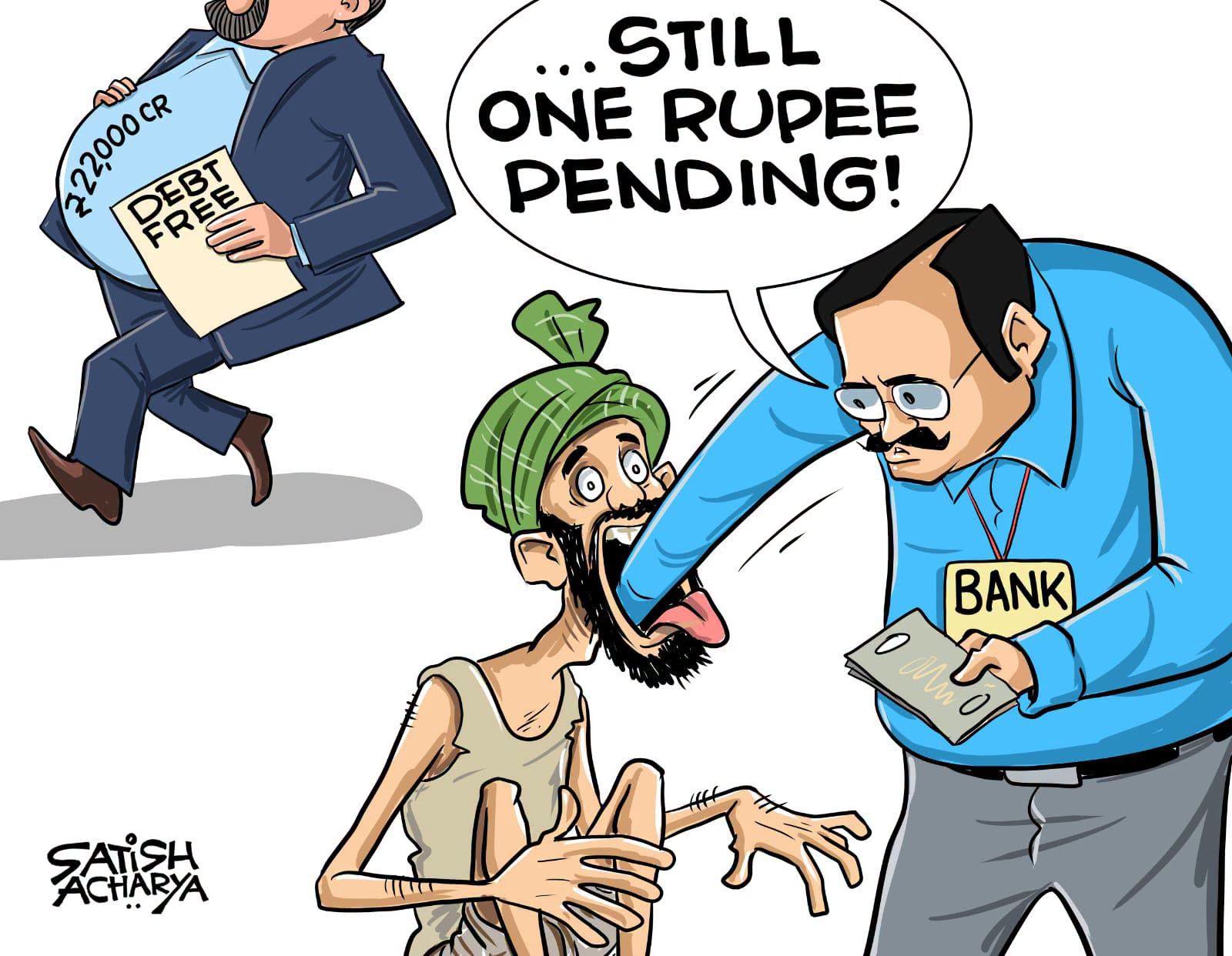
I wish to draw attention to an increasingly disturbing aspect of banking and loan recovery practices in India—the use of aggressive third-party recovery agents who allegedly harass, intimidate and humiliate borrowers who have defaulted on loans, even when the default has occurred because of genuine financial hardship.
There is no question that a borrower has a responsibility to repay a loan. Banks are legitimate businesses, and recovery of outstanding dues is an essential part of a functioning financial system. However, there must be a clear distinction between legitimate debt recovery and harassment.
A person can fall into financial difficulty for reasons entirely beyond his or her control. Loss of employment, illness, accidents, business failure, family emergencies or sudden loss of income can make it impossible for an otherwise responsible borrower to meet an EMI. Such borrowers may genuinely want to repay their obligations but simply need time, restructuring or a realistic repayment arrangement.
Unfortunately, instead of approaching such situations with a structured and humane recovery mechanism, some banks appear to rely heavily on outsourced recovery agencies and agents whose methods can become aggressive and intimidating.
Borrowers may receive repeated calls from different numbers throughout the day, unsolicited messages, automated calls and continuous reminders. In some cases, the frequency of these communications can amount to what ordinary people would reasonably describe as harassment.
Even more concerning is the alleged practice of contacting **family members and other people connected with the borrower**.
Imagine losing your job or suffering a serious financial setback and then having recovery agents repeatedly call your spouse, parents, siblings or other relatives regarding your personal loan. Family members who may have absolutely no legal responsibility for the debt can suddenly become targets of repeated calls and messages.
This raises serious questions about privacy, dignity and accountability.
A loan agreement is between the lender and borrower. Unless another individual has a legally recognised responsibility for the debt, why should that person's personal telephone number be repeatedly used as a recovery channel? Where did the bank or recovery agency obtain that number? Was consent provided for its use? And what safeguards exist to prevent such information from being circulated among multiple third-party agencies?
The use of abusive, threatening or foul language by recovery agents is even more unacceptable. If an agent deliberately provokes a borrower into anger and then uses that confrontation as a means of applying additional pressure, the process has moved far beyond professional debt collection.
**Debt recovery should not become psychological warfare.**
Banks may outsource recovery operations, but they should not be allowed to outsource accountability.
If a recovery agency is acting on behalf of a bank, the bank must remain responsible for ensuring that the agency follows applicable laws, regulatory requirements and basic standards of professional conduct. A bank should not be able to simply say, "It was a third-party agent," whenever a customer complains of abusive behavior.
The Reserve Bank of India must take cognizance of these practices and examine whether the existing regulatory framework is sufficiently effective in dealing with modern forms of recovery harassment.
The regulatory framework must address not only physical intimidation but also digital and telecommunications-based harassment, repeated calls from different numbers, automated call systems, message-box spamming, excessive communications, misuse of personal contact information and attempts to pressure borrowers through their relatives.
Every recovery agent should be identifiable and traceable. Borrowers should be able to verify which bank has authorized the agent and which agency they represent. Complaints regarding threats, abusive language, intimidation or improper contact with unrelated family members should be independently investigated.
There should also be meaningful consequences for banks and recovery agencies that repeatedly permit such conduct. Where behavior crosses the threshold into threats, stalking, abuse, unlawful disclosure of personal information or other criminal conduct, it should be treated as a potential legal matter rather than merely an internal customer-service complaint.
At the same time, borrowers cannot use financial hardship as an excuse to permanently avoid legitimate debt. Borrowers should communicate with their lenders, provide evidence of genuine hardship where appropriate and seek restructuring, settlement or other lawful solutions.
But **being unable to pay is not a license for a bank to strip a person of dignity**.
India needs a banking system that encourages responsible borrowing while also protecting citizens from abusive recovery practices. Financial institutions have considerable power over ordinary borrowers. That power must be exercised responsibly.
A person who has lost a job should be offered a path back to repayment—not subjected to humiliation. A person suffering from illness should be given a reasonable opportunity to recover financially—not bombarded with calls. And a borrower's family should not be dragged into the matter merely because recovery agents believe that pressure through relatives will produce payment.
The objective of loan recovery must be **repayment, not revenge; resolution, not humiliation; and financial discipline, not intimidation.**
I therefore urge the RBI to seriously investigate complaints of aggressive recovery practices, strengthen regulations governing third-party recovery agents, establish stronger accountability for banks employing such agencies, and create an effective mechanism through which borrowers can report harassment and obtain timely relief.
Private-sector banks should not be permitted to operate a parallel recovery system where aggressive agents can repeatedly contact, provoke and intimidate citizens with little apparent accountability.
Banks have the right to recover their money. Borrowers have the right to be treated with dignity. One should never have to be sacrificed for the other.
#LoanRecovery #BankingHarassment #RBI #ConsumerRights #BorrowersRights #RecoveryAgents #DebtRecovery #BankingReforms #FinancialHarassment #DataPrivacy #ResponsibleBanking #IndianBanking #VoiceOfTheConsumer #Accountability #India