

Is your Drupal site ready for Drupal 11? If you're on Drupal 10 or 9, the move to Drupal 11 is usually an upgrade. If you're on Drupal 7 or 8, it's a migration. Ei
Is your Drupal site ready for Drupal 11? If you're on Drupal 10 or 9, the move to Drupal 11 is usually an upgrade. If you're on Drupal 7 or 8, it's a migration. Ei

How much does a Drupal 7 to 11 migration cost? Meta description: What drives the cost of a Drupal 7 to Drupal 11 migration, what you can expect to pay, and how to

The Hidden Cost of Social Media Platforms and Why Listberg.com Is a Better Home By Pemson Pereira, founder of Listberg.com Social media feels free. You sign

Intraday Trading with Deterministic Drift Indicators How to measure, filter and trade the directional push in price, without guessing and without pretending to cer

LDA‑B&B is a branch‑and‑bound solver for symmetric TSP combining multi‑start nearest‑neighbour/2‑opt incumbents, look‑ahead and regret branch ordering, and a residual MST lower bound. The implementation contains a critical bug: the MST routine silently prunes the root node, returning a heuristic tour as proven optimal. After fixing this, the solver is exact but only up to ~20 cities. Look‑ahead and regret change node counts by 0.4% when optimality is proven. Replacing the MST bound with a Held–Karp 1‑tree bound dramatically improves performance: it reduces root gaps from 20–36% to 1% and proves random instances with 25 and 30 cities in 301 and 536 nodes. All eight small TSPLIB instances (n ≤ 42) are solved to optimality in under 4 seconds. Root bounds on mid‑size instances (1 060–2 319 cities) lie 0.5–2.2% below reference optima. Clustered instances remain hard. The study concludes that the lower bound, not branching heuristics, determines the exactness frontier.

This Listberg guide curates 100 prominent FMCG and grocery products shaping everyday Indian consumption, noting it is not an audited sales ranking. Items span staples (Amul, Tata Salt, Aashirvaad), packaged foods (Maggi), home and personal care (Surf Excel, Dove), beverages, and snacks, including Goa specialties. Key trends include kirana-led retail transformation, with e-commerce reaching 7% of national FMCG sales; branding of unbranded staples; convenience foods; dairy diversification; and regional preferences coexisting with national brands. While HUL and Nestlé dominate, smaller brands gain traction digitally. Success depends on availability, affordable packs, habit, trust, and regional relevance. Ultimately, India’s FMCG market is a complex mix of traditional and digital, mass-market and premium, and national and regional consumption, offering greater choice and complex competition.

Universal Basic Income (UBI) is a concept that can address India's pressing issues of economic insecurity and inequality. The idea is to provide every citizen with a basic income, ensuring a minimum standard of living and dignified existence. This approach aligns with the Indian nation's immense human potential, technological capabilities, and natural resources. UBI complements existing welfare programs, promoting dignity, agency, and equitable participation in the economy. It aims to mitigate the effects of automation and AI on employment, inequality, and social security. By ensuring every citizen has a basic economic foundation, UBI can foster a more inclusive and prosperous India.
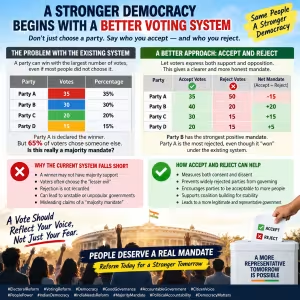
The article critiques the common claim that a winning party has a “majority mandate” when it may only have a plurality. In a divided electorate, a party can govern while most voters support alternatives, undermining democratic legitimacy. The author also argues that ballots hide rejection: voters may choose a party only to stop another. To fix this, they propose an Accept-and-Reject Voting System, where voters record which parties they accept and which they reject. A party’s mandate would be measured by net acceptance. This would require winners to show broad public acceptance and not overwhelming rejection, encouraging parties to widen their appeal. Coalition governments could then form among parties with sufficient collective legitimacy. Ultimately, the author calls for electoral reform that measures consent and dissent, not who finishes first.

Welcome to Sierra Blog Page Hello World! Welcome to my website

Economic growth and digitalization matter, but without meaningful occupation and sustainable livelihood, they cannot ensure human dignity. India’s Constitution (Articles 39, 41, 43) directs development toward livelihood security, yet improving unemployment statistics mask a deeper problem: many citizens, especially youth, lack pathways from education to independent work. Merely being employed is insufficient if earnings don’t support independence. Technology amplifies opportunity but also concentration. Thus, focus must shift from economic size to better growth connecting education, skills, and occupation to income and assets. Success requires shared responsibility among government, corporations, and institutions to include citizens as producers. Ultimately, an economy’s true measure is how many can participate meaningfully and live with security and dignity, not its global ranking.

Our pursuit of equality can lead to forgetting the value of difference, which is an inevitable aspect of human existence. Inequality is not always a problem, but our inability to accept another person's advantage can be. Human beings are unique from birth, with different talents, temperaments, and abilities. Different people are needed to perform various roles and contribute to society, like doctors, engineers, and farmers. We should not measure our worth against others but against our own potential. Instead, we should strive for dignity and improvement, while accepting that we may not have everything others have. By acknowledging and accepting our differences, we can create a society where everyone has the opportunity to live a meaningful life.
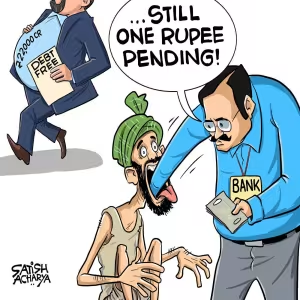
India’s banking sector increasingly uses aggressive third‑party recovery agents who harass defaulting borrowers with repeated calls, messages, and intimidation—sometimes contacting family members and violating privacy and dignity. While lenders have a right to recover dues, the line between legitimate collection and harassment is blurred. Financial hardships such as job loss, illness, or accidents often cause defaults, yet banks resort to outsized pressure instead of restructuring or compassionate arrangements. The RBI must tighten regulations to curb digital harassment, ensure agents are identifiable, hold banks accountable for their conduct, and provide borrowers an effective complaints mechanism. Recovery should aim at repayment, not humiliation, preserving borrowers’ dignity while enforcing legitimate debt obligations.