

Yearning for More
Yearning for more You build a house with walls so fine,With polished floors and grand design,Yet when you sit in silence there,It feels so empty, cold, and bare. Yo
Yearning for more You build a house with walls so fine,With polished floors and grand design,Yet when you sit in silence there,It feels so empty, cold, and bare. Yo

Through the Darkest Nights tells of a man who, once bright and warm, fades into a ghost‑like silence, ceasing to explain or defend himself as the colors of his outward life drain away. Inside he feels a vast, empty gap, yet discovers that what he gains—a profound, soul‑deep truth—outweighs all loss. After enduring long, cold, doubtful nights, he gently sheds the illusion he once wore for others, seeing himself not through praise or fear but through his own core. In that still, vast self‑knowledge he finally becomes whole.

The Road I Took Alone The road I took was dark and steep,With thorns that made my spirit weep.No sign of light, no guiding star,Just distant hopes that felt too far.

All the glittering gold Glitter sits gently on a hollow face,A practiced curve, a borrowed grace.Smiles rehearsed in fractured light,Day masquerading over night. Ey
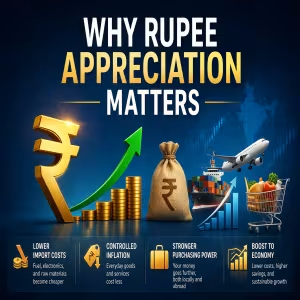
Rupee appreciation impacts purchasing power, inflation, trade competitiveness, and economic sovereignty. Rather than relying on market forces alone, a stronger Rupee requires deliberate policy intervention. Key drivers include boosting productivity through automation and high-value manufacturing, energy independence via renewables to cut oil imports, inflation management through supply-side reforms, and diversifying critical resources via domestic R&D. However, rapid appreciation risks harming export competitiveness, so the goal should be stable, gradual strengthening aligned with productivity. Nominal prices may not fall drastically, but real purchasing power should improve if wages outpace inflation. The government must play a central role via coordinated initiatives, regulatory reforms, and accountability. Ultimately, Rupee strength is a byproduct of structural economic strength, demanding disciplined execution for improved living standards and resilience.
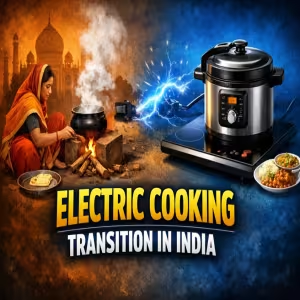
This analysis compares induction and LPG for household cooking. Induction costs ₹500–₹600/month, consumes 84 units electricity, achieves 90%+ efficiency, and benefits from stable tariffs. LPG costs ₹700–₹1100/month, has moderate 40–60% efficiency, and faces price volatility. Induction offers precise control but requires compatible cookware and is vulnerable to power outages; LPG works anytime and suits high-heat tasks like roti and frying. A hybrid approach—using induction for boiling/rice/dal and LPG for roti/frying—reduces LPG usage by 30–50% while maintaining flexibility. Pure induction is most cost-effective for daily cooking, but LPG remains valuable as a complementary system, balancing cost, efficiency, and practical constraints.

The Kingly Throne In the quiet forge where thoughts arise,Guard the gates of inward skies.Let not each fleeting impulse reign,Nor trade your will for moment’s gain.

More than a Coin Below the sky we give, we take,For dreams we chase, for bread we make.A coin we earn is not just pay,It holds our time, our living day. More than t

? The Quiet Art of Awareness Be still, be kind, slow your pace, Feel your breath, feel time and space. Watch the body, hear the mind, In quiet moments, truth you’ll find.

Analysts call Mina Protocol a "sleeping giant" because its entire blockchain remains a constant, tiny ~22 KB, unlike Bitcoin's 500+ GB. This is achieved through recursive zero-knowledge proofs (zk-SNARKs), which compress the entire transaction history into a single, verifiable cryptographic proof. This lightweight design allows smartphones to instantly verify the whole chain, enabling high decentralization and internet-scale verification. It is built for "zkApps," private smart contracts for uses like identity verification and secure voting. While its potential as a Web3 verification layer is significant, the project is still "sleeping" due to a small ecosystem and competition from other zk-rollups. If zero-knowledge tech becomes mainstream, Mina's unique properties could lead to massive growth.

A Measure of a Life outlines the human journey from infancy to old age as a progression of pivotal moments: learning to crawl, speak, walk, and make friends; acquiring education, landing a first job, buying a car, finding a partner, and securing a home. Later stages bring parenting, investing, publishing, teaching, and caring for aging parents. The poem argues that true worth lies not in wealth or fame but in the deeds we choose—supporting others, sharing knowledge, nurturing family, and giving back. Ultimately, a life is measured by the generosity and care we extend, forming a quiet, whole arc from the first steps to final acts of love and legacy.
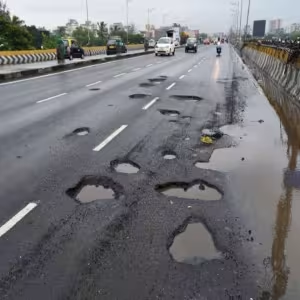
Enough Roads but of Bad Quality India's road construction prioritizes quantity over quality, with multiple agencies managing different road classifications under the Ministry of Road Transport and Highways. However, a critical accountability gap exists where citizens face penalties for traffic violations while executing agencies escape responsibility for poor road conditions. Roads across cities and newly built highways deteriorate rapidly due to substandard construction materials, poor engineering standards, and inadequate drainage systems. Repeated digging for utilities followed by crude patchwork wastes taxpayer money and creates dangerous driving conditions. Potholes, uneven surfaces, and improper slopes cause accidents, vehicle damage, and traffic congestion. The current system lacks meaningful quality control, independent audits, and personal accountability for officers and contractors. Citizens pay fines while enduring hazardous infrastructure failures they didn't create. The author calls for reciprocal accountability: imposing penalties on departments and contractors for substandard work, mandatory public quality audits, strict penalties for unauthorized road digging, and performance-based infrastructure evaluation. Only equal accountability for both road users and builders will ensure safe, durable roads that justify citizen compliance with traffic regulations.