
In The Passion of the Truth by Pemson Pereira, Truth is personified as a divine, unbiased flame. Seeking reason and debate, it challenges philosophers and power holders. Yet, the world, weary of its light exposing injustice, crucifies Truth upon a cross of apathy, ignorance, and self-interest, sealing it in a tomb of conformity. However, Truth stirs within dissent and forgotten questions. Through acts of courage and rebellion, it rises quietly, like a seedling, in the questioning child and the dissenter. This resurrection is not a single event but an ongoing daily struggle between doubt and faith. Pereira issues a call to action: readers must question, challenge, and speak out now, becoming the light that ensures truth prevails over lies in every generation.

Articles
The latest stories from Listberg.
45 results
The Hidden Cost of Social Media Platforms and Why Listberg.com Is a Better Home By Pemson Pereira, founder of Listberg.com Social media feels free. You sign
A Measure of a Life outlines the human journey from infancy to old age as a progression of pivotal moments: learning to crawl, speak, walk, and make friends; acquiring education, landing a first job, buying a car, finding a partner, and securing a home. Later stages bring parenting, investing, publishing, teaching, and caring for aging parents. The poem argues that true worth lies not in wealth or fame but in the deeds we choose—supporting others, sharing knowledge, nurturing family, and giving back. Ultimately, a life is measured by the generosity and care we extend, forming a quiet, whole arc from the first steps to final acts of love and legacy.
The author argues "everybody's work is nobody's work" captures fragmented responsibility normalizing bureaucratic delay. No official feels answerable for outcomes, creating an accountability vacuum filled by "agents" who monetize free public services through under-the-table rates. This systemic rent-seeking spans departments like the RTO, normalizing corruption where efficiency is preserved to feed the chain. Vulnerable citizens suffer most, trust erodes, and well-meaning officials are trapped while digitization fails due to opaque processes. The root cause is a lack of end-to-end ownership. Solutions require transparent timelines, visible accountability, independent audits, and consequences for non-performance. Without rejecting this normalization—citizens refusing to pay, officials refusing to collude—the quiet prostitution of public services continues, undermining governance as a public good.
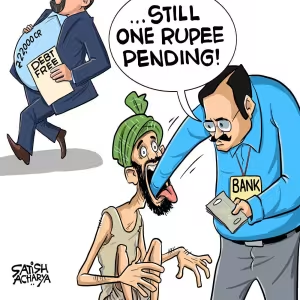
India’s banking sector increasingly uses aggressive third‑party recovery agents who harass defaulting borrowers with repeated calls, messages, and intimidation—sometimes contacting family members and violating privacy and dignity. While lenders have a right to recover dues, the line between legitimate collection and harassment is blurred. Financial hardships such as job loss, illness, or accidents often cause defaults, yet banks resort to outsized pressure instead of restructuring or compassionate arrangements. The RBI must tighten regulations to curb digital harassment, ensure agents are identifiable, hold banks accountable for their conduct, and provide borrowers an effective complaints mechanism. Recovery should aim at repayment, not humiliation, preserving borrowers’ dignity while enforcing legitimate debt obligations.
Money and happiness are intertwined—higher income correlates with greater life satisfaction, yet covering basic needs and reducing financial stress improve well-being. However, money cannot guarantee joy; relationships, health, and gratitude remain essential. Wealth enhances health through better nutrition, healthcare access, and reduced stress, acting as a buffer against illness. While wealth doesn't automatically bring contentment, extreme frugality or excess can both harm wellbeing. Assets vary: cars and gadgets depreciate, while homes and investments appreciate. The time value of money means current dollars outweigh future ones due to inflation and compounding. Early, consistent investing generates substantial growth over decades. Emergency funds (3–6 months of expenses) prevent debt during crises. Balancing savings with purposeful spending, avoiding scarcity mindsets, and leveraging compound interest are key to financial and emotional well-being.
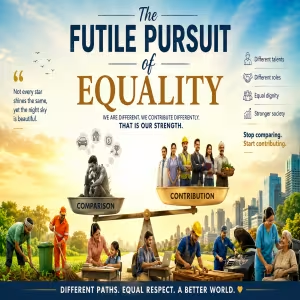
Our pursuit of equality can lead to forgetting the value of difference, which is an inevitable aspect of human existence. Inequality is not always a problem, but our inability to accept another person's advantage can be. Human beings are unique from birth, with different talents, temperaments, and abilities. Different people are needed to perform various roles and contribute to society, like doctors, engineers, and farmers. We should not measure our worth against others but against our own potential. Instead, we should strive for dignity and improvement, while accepting that we may not have everything others have. By acknowledging and accepting our differences, we can create a society where everyone has the opportunity to live a meaningful life.
WordPress is user-friendly, ideal for beginners, blogs, and small sites. It offers vast themes and plugins, good customization, and low costs, but can struggle with security and scalability on large sites. Drupal has a steeper learning curve requiring technical skills, but excels in flexibility, scalability, and security for complex, enterprise-level websites. It’s more expensive to develop but cost-effective for large projects. Both are strong; WordPress suits simplicity and quick setup, while Drupal fits complex, scalable needs with technical expertise.
Okay, let's break down WordPress and Drupal for a future-proof web application. Both are excellent choices, but they have different strengths and weaknesses regarding
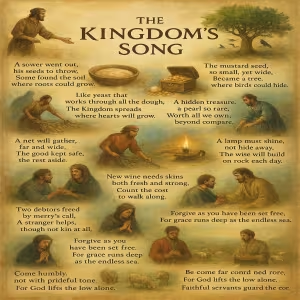
A sower went out, his seeds to throw, Some found the soil where roots could grow. Yet weeds arose, and choked the land, But wheat still bloomed by the Father’s hand.
Retirement planning must treat retirement as a funded liability rather than a speculative investment. The article proposes a robust, expense-first formula to calculate the required corpus: {Desired Annual Income} x {Life Expectancy} - {Current Age}) + {Inflation Buffer in years (5 years usually)} By prioritizing expenses over market returns, this method accounts for longevity and inflation uncertainty via a 5–10 year buffer. Case studies for ages 30, 50, and 60 illustrate stage-specific strategies: leveraging time at 30, managing risk at 50, and protecting capital at 60. Ultimately, this simple formula provides a realistic, adaptable baseline to secure financial dignity and robustly prepare for an unpredictable future.
Across democracies, a troubling pattern has become increasingly clear: major political parties, once envisioned as vehicles for collective progress, have gradually transformed into power-centric institutions. Decision-making has become concentrated in the hands of a few, driven less by public welfare and more by electoral dominance, personal gain, and long-term control. In this shift, the original purpose of political social good has been diluted, and in many cases, replaced by exploitation masked as governance.